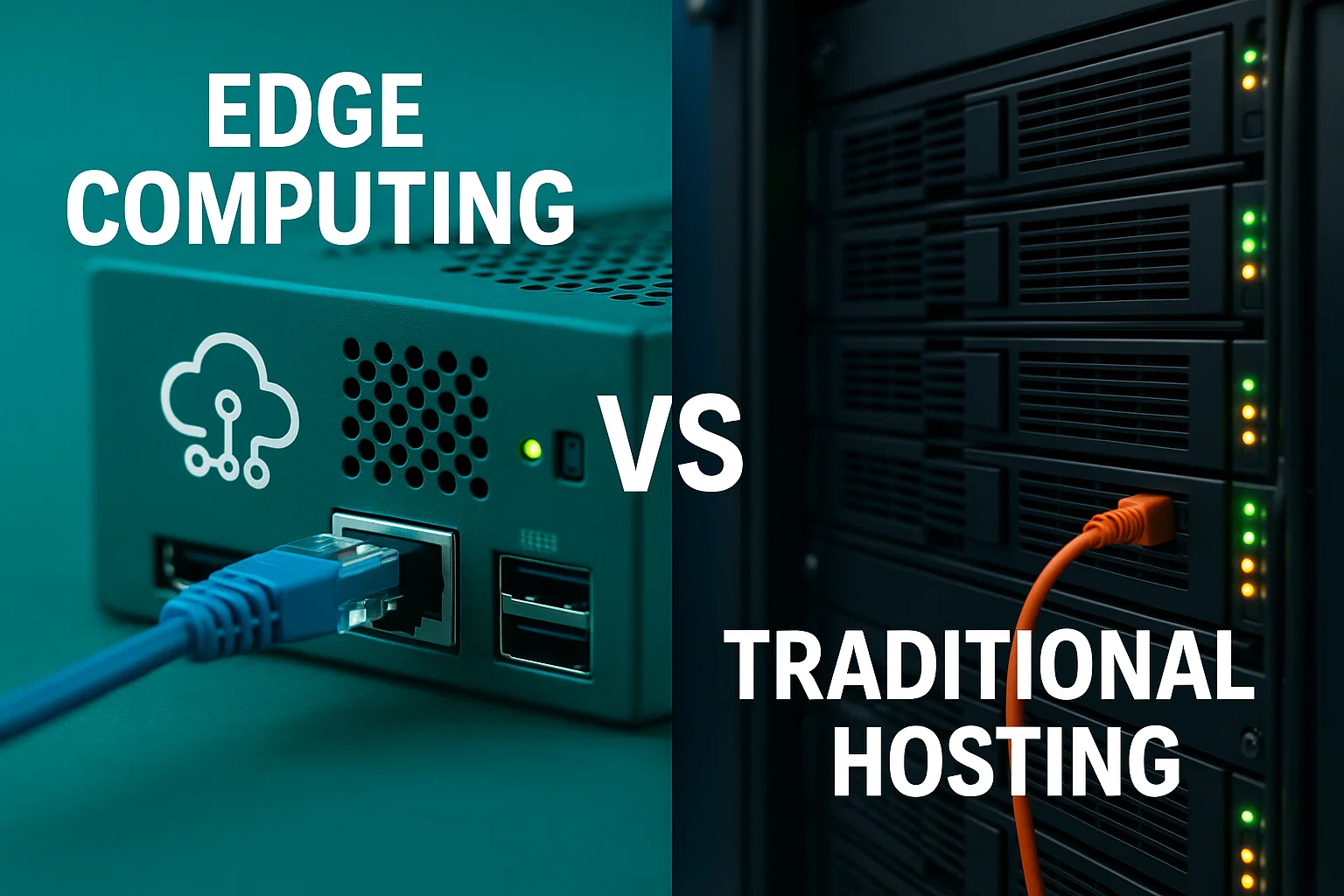
The Traditional Server Model: Limits on Speed and Reach
Historically, most web applications relied on a single centralized server hosted in one data center. While simple to set up, this approach has inherent limitations for businesses with users distributed globally.
In this setup:
- A user sends a request from their browser.
- The request travels across the internet to the central server.
- The server processes the request.
- The response travels back to the user.
If your server is in the United States and your user is in Asia or Europe, requests must travel thousands of kilometers, causing delays.
For businesses, these delays translate into lost conversions, slower engagement, and poor user experience. Every extra second matters.
Edge Computing: Bringing Users Closer to Your Product
Edge computing solves this problem by moving computation closer to the user. Instead of relying on a single centralized server, your application runs across hundreds of global locations, also known as Points of Presence (PoPs).
Modern platforms deploy your code to these locations, ensuring that requests are handled locally, instantly, and reliably.
How It Works for Businesses
- A user sends a request.
- The request is routed to the nearest edge location.
- Application logic runs at the edge.
- The response returns immediately.
Practical benefits:
- A user in London gets served from London
- A user in Tokyo gets served from Tokyo
- A user in Mumbai gets served from Mumbai
This reduces latency, improves page speed, and directly increases user satisfaction.
Why Edge Computing Matters for Business
1. Faster User Experience
Latency is one of the biggest barriers to engagement. Edge computing dramatically reduces Time-to-First-Byte (TTFB), which is critical for:
- retaining users on web and mobile apps
- increasing conversion rates
- boosting search engine rankings
A faster site is not just technical—it’s a revenue driver.
2. Effortless Global Scaling
Traditional servers require manual scaling, which involves:
- load balancers
- additional server instances
- continuous monitoring
Edge platforms handle this automatically. Whether you receive hundreds or millions of requests, the platform distributes traffic globally, without extra operational overhead.
This makes launching products internationally faster and less expensive.
3. High Reliability and Uptime
Centralized infrastructure has a single point of failure. If a data center goes down, users cannot access your service.
Edge networks route traffic to the nearest healthy node, ensuring continuity. For businesses, this means:
- uninterrupted service
- fewer support tickets
- higher trust with customers
4. Instant Execution and Cold Starts
Modern edge runtimes use lightweight isolation models that start in milliseconds. This eliminates delays common in serverless or container-based platforms.
Business-critical operations that benefit:
- API calls
- Authentication and authorization
- Personalization
- Content delivery
This ensures a smooth user journey and reliable platform performance.
Cost Efficiency: Edge vs Traditional Servers
| Feature | Traditional Server | Edge Platform |
|---|---|---|
| Fixed Cost | Monthly server fees | Often free or pay-per-request |
| Scaling | Manual | Automatic |
| Maintenance | OS updates, patching | Fully managed |
| Bandwidth | Charged separately | Often optimized globally |
For startups or small teams, edge computing reduces operational costs while maintaining speed and reliability. You only pay for what you use.
When Centralized Servers Are Still Needed
Edge computing is not a replacement for all workloads. Certain tasks still benefit from centralized servers:
- training large machine learning models
- video rendering or encoding
- heavy background computation
- complex database operations
These require resources that edge runtimes typically cannot provide efficiently.
Conclusion: A Distributed Future
The web is moving from centralized servers to distributed, edge-native infrastructure.
Benefits for businesses include:
- faster performance and lower latency
- automatic global scaling
- improved reliability and uptime
- reduced operational complexity
While centralized servers remain relevant for heavy computations, the default architecture for modern web applications is rapidly shifting to the edge.
The future of the internet is no longer tied to one location—it exists everywhere at once, closer to your users than ever.